Subscribe For Free Updates!

We'll not spam mate! We promise.

Showing posts with label Electronics. Show all posts

Tuesday, May 28, 2013

B Go beyond the limits!-Fast on the road and in difficult terrain, agile in the air

Quadcopters are becoming more and more popular with radio-controlled model enthusiasts, but sometimes ... sometimes you still just want to remotely-control a car. If that’s the case with you, then UK-based product designer Witold Mielniczek has got you covered. His prototype vehicle, known simply as B, functions as both a quadcopter and an off-road racer.

The rear wheel-drive vehicle has a tough polycarbonate body, and four wheels referred to as driving rings

The rear wheel-drive vehicle has a tough polycarbonate body, and four wheels referred to as driving rings. Each ring is driven not by a center-mounted axle, but instead by cog mechanisms at the bottom of the rim. This leaves the center of the rings clear for four 7-inch propellers, which allow the vehicle to get airborne on the fly (no pun intended).

Each driving ring is driven not by a center-mounted axle, but instead by cog mechanisms at the bottom of the rim

The driving rings are flexible and removable, so they won’t snap every time B makes a hard landing. The propellers are also flexibly-mounted, adding to the vehicle’s crash-worthiness.

Some of B's features

Power is provided by an 11.1-volt lithium-polymer battery, which reportedly provides up to 15 minutes of combined driving and flying per charge. Additionally, an onboard 720p video camera can record point-of-view footage to a Micro SD card.

The driving rings are flexible and removable

Mielniczek has a working prototype, and now hopes to add features such as full waterproofing (allowing it to also serve as a sort of boat), the ability to suck itself onto walls, and a smartphone control app. Eventually, he might even look into the possibility of building a full-sized passenger-carrying vehicle based on the technology, that could be used for humanitarian purposes.

B is a combination RC car and quadcopter, which can be driven or flown

Before any of that can happen, however, he needs to raise production funds, so he’s turned to a Kickstarter campaign. A pledge of £320 (US$484) will get you a ready-to-assemble B, when and if the funding goal is met. If you don’t want to supply your own transmitter and would like to get a fully-assembled model, you’ll need to pledge £400 ($605).
B can be seen in action in the campaign video below.
Source: Kickstarter

Wednesday, April 3, 2013

Baidu – Google's search rival in China – is making a Google Glass knockoff


Five years ago, it was easier for a company to sneak a revolutionary tech product onto the market. Today the whole world is nervously watching. Anything that looks like it could be the next big thing attracts a crowd of copycats. Take, for example, Google Glass. Unproven though it is (not to mention months away from release), Google’s search rival in China, Baidu, is reportedly prepping its own Glass competitor.

Google's competitor in China, Baidu, is reportedly making its own Google Glass competitor     (China image: Shutterstock)


Google does search ... Baidu does search. Google is making smart glasses ... you get the picture.
So brace yourself for Baidu Eye. It sounds like a late April Fools’ Day joke, but – for better or worse – it’s apparently all too real. According toSina.com, the product is about as original as you’d expect. We’re talking glasses with an LCD display, voice control, image recognition, and bone-conducted audio.
Yep, we’re looking at a full-on Google Glass knockoff.

Baidu is currently the fifth most visited website in the world


To the last detail
The report’s details only accentuate the slavish copying. Using your voice to control the glasses and search the web? Check. Gesture control? Baidutotally has that too.
Baidu is apparently working with Qualcomm to extend the glasses’ battery life to 12 hours. So it sounds like Baidu Eye will sport a Qualcomm processor of some sort.
Baidu is supposedly developing the product’s software on “an open platform.” Wouldn’t it be brilliantly ironic if that open platform were a forked version of Android?

A new game

It's easy to laugh at the brazen clone job here, but Baidu probably sees the potential for a new generation of search (and advertising). Apple's breakthrough products of the last decade, the iPod, iPhone, and iPad, beat the hell out of slow-reacting competitors (see BlackBerry, Palm, Microsoft ...).
Apparently the new thing is copying the next big thing before it's too late ... and before anyone knows for sure whether it will be the next big thing.
Source: Sina.com

Monday, April 1, 2013

Sony adds NFC to wireless speakers

Thanks to the growing number of wireless speaker systems, those of us who have a good-sized digital music collection on our smartphones or tablets no longer have to concern ourselves with docking our device to hear our favorite tunes. Sony is aiming to make complicated wireless setup and fiddly pairing a thing of the past too, with the introduction of a streaming audio system with one-touch near field communication (NFC) connection.


Sony says that the combination of 40 W RMS magnetic fluid speakers which use an advanced ferrofluid developed for the NASA space program and the built-in S-Master amplifier offers listeners a rich, detailed full range sound with top notch clarity and depth.
The 481 x 202 x 86 mm (18.9 x 7.9 x 3.3-inch) all-in-one CMT-BT80WB system features a slot-loading CD player, and both DAB and FM radio with 20 presets each. Integrated Wi-Fi caters for wireless streaming of music from a computer over a home network via DNLA, and it's AirPlay-compatible to boot.
If you have an NFC-enabled smartphone or tablet, touching your device to the system instantly establishes a Bluetooth wireless connection. There's also a USB charging/playback port and a 3.5 mm auxiliary input should your music device not support wireless streaming.
The CMT-BT80WB system (along with an NFC/Bluetooth-only CMT-BT60B version) will be available in Europe from May. There's no word on pricing at this time.
Source: Sony Europe

Sunday, March 24, 2013

Solar-powered Volta Racer is flexible about finding sunlight


If you want to teach children about hydrogen power, you can always buy them a fuel cell-powered toy car like the H-ROVER or the H2GO. Should you wish to show them the merits of solar power, there are also quite a number of solar panel-equipped cars from which to choose. ToyLabs’ new Volta Racer, however, is reportedly the first toy car to feature a flexible polycrystalline silicon solar panel.

The Volta Racer is powered by a flexible polycrystalline silicon solar panel

The main advantage of the flexible panel lies in the fact that it can capture sunlight from a wider variety of angles than a rigid panel. Presumably, it’s also a little more damage-resistant – a prime consideration with kids’ toys.
The car itself is reportedly made from “super-lightweight, eco-friendly, recyclable materials” (including bamboo axles) and can be put together without tools in about 15 minutes. Users can choose between assembling it in either of two solar panel configurations, and using either high- or low-speed gearing. It can move over a variety of terrains.
It is not remotely-controlled, but instead just boogies along in a straight line, or in a circle if the front axle is first angled accordingly by the user. It doesn't have a battery (yet), but ToyLabs founder Tim Curley informs us that "it runs as long as the sun is shining."
The Volta Racer is available in five colors, and is priced at US$24.99. It can be seen in action below.
Source: ToyLabs

Wednesday, February 20, 2013

MIT's new image-processing chip improves digital snapshots


Snapshots banged off on a smartphone, tablet or point-and-shoot camera could soon be getting a lot better looking thanks to a new processor chip. Developed by researchers at MIT’s Microsystems Technology Laboratory, the new chip enhances images within milliseconds, and reportedly uses much less power than the image processing software installed on some devices.

Saturday, January 19, 2013

Friday, January 18, 2013

Using air to charge cellphones?

Using air to charge cellphones? IIT-Delhi does it!

All you need to charge your mobile is -- air!

Students at the Department of Industrial Design at Indian Institute of Technology, Delhi have attached a turbine with a mobile phone that helps charge it even when the user is travelling.

"The electricity generated by the turbine when moved by wind energy could charge a cellphone in an emergency. It generates electricity to the tune of 3 to 4 watts which is sufficient to charge a mobile phone."

The specially designed turbine, which costs about Rs.200 to be developed inside a laboratory, is so small that it could be easily kept in a pocket.

The primary objective of the device is to extend mobile 'connectivity' where there is no electricity. The device also saves energy, though not to a significant extent.

The device is best suited for coastal areas where the wind flows almost continuously.

The technique is not yet commercialized but the department has sent a proposal to the ministry of science and technology to help manufacture the turbine on a large scale.

"The device will help mobile phone users charge their phones while travelling in a bus, a car or a train. All they need to do is -- place the turbine against the wind flow. It will use wind energy to move the turbine thereby generating energy."

The students have also used a spring in the device that can store energy through a handle. It could be used to charge a mobile during power cuts.

concepts in digital VLSI DESIGN..

Digital VLSI circuits are predominantly CMOS based. The way normal blocks like latches and gates are implemented is different from what students have seen so far, but the behavior remains the same. . Let us look at some of the factors involved,
CIRCUIT DELAYS
Large complicated circuits running at very high frequencies have one big problem to tackle propagation of signals through gates and wires .
POWER 
Another effect of high operation frequencies is increased consumption of power. This has two-fold effect - devices consume batteries faster, and heat dissipation increases
LAYOUT
Laying out the circuit components is task common to all branches of electronics. What’s so special in our case is that there are many possible ways to do this; there can be multiple layers of different materials on the same silicon, there can be different arrangements of the smaller parts for the same component and so on.
Vlsi design category

Saturday, December 15, 2012

Indium gallium arsenide transistor could boost microchip performance


As there is a finite number of transistors that can be effectively packed onto a silicon chip, researchers have been searching for an alternative to silicon that would allow integrated circuit development to continue to keep pace with Moore's Law. Researchers at MIT have recently used indium gallium arsenide to create the smallest transistor ever built from a material other than silicon. The new transistor, which is said to “work well,” is just 22 nanometers long and is a metal-oxide semiconductor field-effect transistor (MOSFET), which is the kind typically used in microprocessors.
While nanoscale silicon transistors have also been built, the amount of current that they are able to handle is very limited by their small size. This is why there’s the potential for silicon microchips to simply “max out” – in order to fit more transistors onto a chip, they have to be smaller, but they simply can’t get much smaller and still work.

A cross-section transmission electron micrograph of the tiny new transistor


The electrical properties of indium gallium arsenide, however, allow the tiny new MIT transistor to still handle a decent current – due to its high conductivity, indium gallium arsenide has also found use in fiber optics andsolar cells. Because the transistor is much smaller than a regular silicon transistor, yet still performs well, this means that a greater number of them could be crammed onto a chip, and Moore’s Law could continue.
The researchers now plan on further decreasing the transistor’s electrical resistance, to boost its performance and to allow its size to be reduced even more.
“We have shown that you can make extremely small indium gallium arsenide MOSFETs with excellent logic characteristics, which promises to take Moore’s Law beyond the reach of silicon,” said one of the chip’s co-developers, Prof. Jesús del Alamo.
Scientists from Purdue and Harvard universities have also been developingindium gallium arsenide transistors – with a three-dimensional structure.
Source: MIT

Thursday, September 6, 2012

What is a processor ? How they Work ?

morecores_intro.jpg

Every computer has a processor, whether it's a small efficiency processor or a large performance powerhouse, or else it wouldn�t be able to function.Of course, the processor, also called the CPU or Central Processing Unit, is an important part of a functioning system, but it isn't the only one.
Today's processors are almost all at least dual-core, meaning that the entire processor itself contains two separate cores with which it can process information. But what are processor cores, and what exactly do they do?

What Are Cores?


core_explained_powerpc.jpg

A processor core is a processing unit which reads in instructions to perform specific actions. Instructions are chained together so that, when run in real time, they make up your computer experience. Literally everything you do on your computer has to be processed by your processor. Whenever you open a folder, that requires your processor. When you type into a word document, that also requires your processor. Things like drawing the desktop environment, the windows, and game graphics are the job of your graphics card � which contains hundreds of processors to quickly work on data simultaneously � but to some extent they still require your processor as well.

How They Work ?

Fetch


The fetch step is what you expect it to be. Here, the processor core retrieves instructions that are waiting for it, usually from some sort of memory. This could include RAM, but in modern processor cores, the instructions are usually already waiting for the core inside the processor cache. The processor has an area called the program counter which essentially acts as a bookmark, letting the processor know where the last instruction ended and the next one begins.

Decode
Once it has fetched the immediate instruction, it goes on to decode it. Instructions often involve multiple areas of the processor core � such as arithmetic � and the processor core needs to figure this out. Each part has something called an opcode which tells the processor core what should be done with the information that follows it. Once the processor core has figured this all out, the different areas of the core itself can get to work.

Execute


core_explained_old.jpg


Writeback
The final step, called writeback, simple places the result of what�s been worked on back into memory. Where exactly the output goes depends on the needs of the running application, but it often stays in processor registers for quick access as the following instructions often use it. From there, it�ll get taken care of until parts of that output need to be processed once again, which can mean that it goes into the RAM.

Sunday, September 2, 2012

EcoXPower powers bicycle lights and charges mobile devices simultaneously

EcoXPower by EcoXGear is another take on a concept which most Gizmag readers will be familiar with: harnessing the kinetic energy produced while one pedals a bicycle in order to convert it into electricity and charge a smartphone or similar device. Though we’ve covered several products of this nature in the past, such as Nokia's Bicycle Charger Kit, Dahon's BioLogic ReeCharge, and the PedalPower+, the EcoXPower sets itself apart by charging your smartphone or GPS and providing electricity to front and rear lights at the same time.


EcoXPower converts pedal-power into electricity for both headlights and a smartphone


EcoXPower comprises two principle components: a handlebar-mounted, touchscreen-compatible and water-resistant case which will house iPhone, Android, Windows and Blackberry smartphones, MP3 devices and the majority of GPS models and, attached to the bike's front wheel hub, the main unit itself: a dynamo device that uses a clutch to engage the wheel's moving spokes and then convert kinetic energy into electricity. The two components are linked via a cable.

EcoXPower features a white LED front headlight and a red 2 x LED taillight


The main unit integrates a headlight and taillight into the casing, each of which are lit with LED's and controlled via a wired on/off remote switch located on the handlebars or, alternatively, a switch situated on the main unit itself.
EcoXPower's wheel-hub based power-plant contains a lithium-ion battery to ensure the light...

EcoXPower's wheel-hub based power-plant contains a lithium-ion battery to ensure the lights stay on when come to a stop


EcoXPower's main unit packs a 700 mAh lithium-ion battery, which will power the lights and charger for up to 1.5 hours without pedaling, ensuring your lights won't falter when you stop for traffic. It measures roughly 6 x 3 x 3 inches (15 x 7 x 7 cm) and weighs 1.3 lbs (0.5 kg). The company states that its universal hub-mounting bracket will fit most standard and oversized wheel hubs, and it can be adjusted with an included Allen key.

EcoXPower's handlebar-mounted water-resistant touchscreen-friendly case will house all models of iPhone and most other smartphones, in addition to the majority of GPS units


The primary drawback of dynamo devices like the EcoXPower is that they can cause a significant hit to performance when cycling, and some products can make even a short ride feel like hard work. However, just how well the EcoXPower fares in this area won't be clear without a test ride.
The EcoXPower is available now from EcoXGear at a price of US$99.99.
Source: EcoXGear, via Engadget

Wednesday, August 15, 2012

Flexible lithium-ion battery technology is on the march

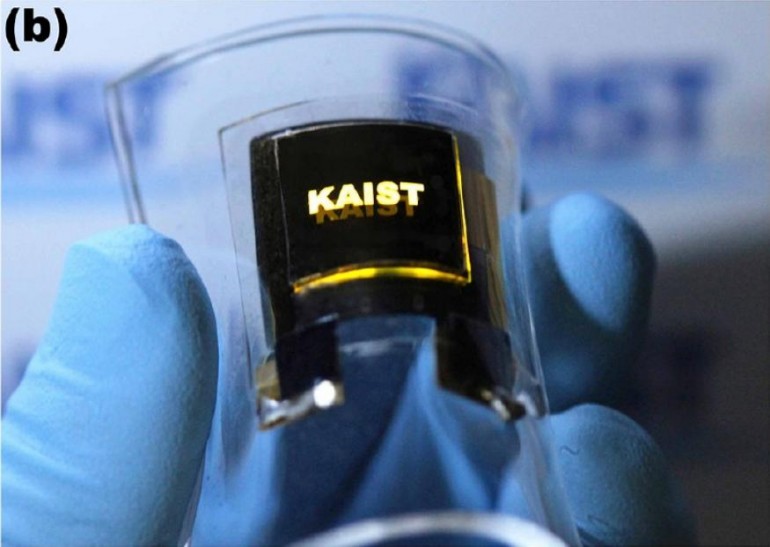
Researchers at the Korea Advanced Institute of Science and Technology (KAIST) have developed a promising solid state, thin-film lithium-ion battery that claims the highest energy density ever achieved for a flexible battery. The new design, which showed for the first time that high-performance thin films can be used for flexible batteries, may be commercialized as early as next year.

A newly developed bendable thin-film lithium-ion battery could help bridge the gap to high-performance bendable electronics 

Lithium-ion batteries are a strong candidate for powering the flexible electronics of the future. A high-performance lithium-ion flexible batterywould be a giant step toward fully-fledged flexible electronics systems and would open the door to flexible e-paper, wearable devices, and better piezoelectric systems that harvest energy from mechanical forces.
Research is progressing, but seems to have hit an invisible – though very real – performance wall. This is because most designs employ either low-performance flexible organic materials, or polymer binders that take up too much space and decrease the battery's power density. In addition, the cathodes have to be treated at high temperatures to improve performance, but this can't be done effectively on substrates made of flexible polymers.
The new approach developed at KAIST uses high energy density inorganic thin films that can be treated at high temperatures, resulting in the highest-performance flexible lithium-ion batteries yet. "There is no performance difference in energy density, capacity, and cycle life between our flexible battery and bulk batteries," Prof. Keon Jae Lee, who led the research efforts, told Gizmag. "On the contrary, performance is improved by about 10 percent because of the stress release effect."
The batteries are built by sequentially depositing several layers – a current collector, a cathode, an electrolyte, an anode, and a protective layer – on a brittle substrate made of mica. Then, the mica is manually delaminated using adhesive tape, and the battery is enclosed between two polymer sheets to improve mechanical resistance.
Bending the battery affects performance, but not to disastrous levels. With the battery constantly bent at a radius of sixteen millimeters (about the same curvature of a fifty-cent coin) the discharge capacity drops by about seven percent after 100 charge-discharge cycles, compared to a three percent drop when the battery is not bent. Voltage was shown to remain almost constant, dropping by a very modest 0.02 V after the battery was bent and released 20,000 times.
"The technology for commercializing this battery could come in a relatively short time, about a year," says Prof. Lee. But first, the researchers need to find a better, automated way to delaminate the mica substrate – the manual method, involving adhesive tape, is very unpractical and can take up to ten minutes per battery.
"We are investigating a laser lift-off [delamination] process to facilitate mass production of large area flexible lithium-ion batteriesr" says Lee. "Its feasibility is already proven and will be reported in a later paper."
The team is also interested in stacking the structures on top of each other to improve charge density.
A paper describing the battery was recently published on the journal Nano Letters. The video below illustrates the voltage performance of the batteries under mechanical stress.
Source: KAIST

Sunday, July 29, 2012

Engineering students build robot capable of creating theoretically infinite WiFi network

In a little over a decade WiFi has flourished to become something that we take for granted every time we go to a coffee shop. The only problem is that in situations where WiFi would be most useful, such as on the battlefield or in a disaster areas, it’s least likely to be available. That’s the problem being tackled by a team of seven undergraduate students at Northeastern University in Boston, MA. As part of their senior project for the Northeastern’s Capstone design program, the team designed and built a robot that can enter rugged territory and create a theoretically infinite WiFi networks as it goes.


The robot was designed to be nearly indestructible


The WiFi repeaters use off the shelf components


 he robot's design incorporates a custom-designed tensioner to protect the drive system


The robot was designed using CAD software


How the WiFi system works

Screenshot of the robot's control interface

 The Northeastern University team faced three problems. First, they needed a robot that could travel over rough terrain or rubble. Second, they had to design a WiFi network that was robust, cheap and easy to deploy and third, they needed a way to control the robot as it built the network.
The robot they came up with turned out to be a squat aluminum tank running on treads similar to those we've seen developed for reconnaissance and disarmament bots. The 40 inches (102 cm) long, 26 inches (66 cm) wide robot weighs in at 150 pounds (68 kg), can carry loads of 200 pounds (91 kg) and was designed to be, in the words of team member Glen Chiacchieri “almost indestructible.” It has a range of 0.62 miles (1 km) with twelve hours of running time on its lithium batteries. Navigation is by GPS and it has a pan-and-tilt webcam complete with night vision and microphone. The robot was designed using CAD software and then tested as a wooden prototype before the final aluminum version was built. This included a custom-designed tensioner to protect the drive mechanism when going over obstacles. All very impressive when you consider that the team member responsible for this had no mechanical engineering experience.
The WiFi network part of the system consists of a number of WiFi repeater boxes carried on the back of the robot and deployed by a solenoid latch system fabricated using a 3D printer. Because the repeaters needed to be robust and use off-the-shelf parts for maximum compatibility at minimum costs, the boxes aren’t as small as the team would like. The boxes use standard Linksys routers with open-source dd-wrt firmware and are fitted with long-range antennas, amplifiers and lithium batteries. The works are mounted in a weathertight, high-impact Pelican case. When the repeater boxes are deployed, they automatically link to the nearest WiFi source and expand the network. Since the network is decentralized and can communicate with any WiFi card, the network is theoretically infinite given enough repeaters.
The clever part of the robot’s design is that its control system uses the very network it creates. The control is a web-based interface that operates over the WiFi network and provides the operator with real-time control of the robot. From a standard keyboard, the robot can be piloted, the onboard camera controlled, repeaters dropped and a GPS map of the robot’s movement displayed. Should the robot wander outside of the WiFi network, it can then retrace its path until it reacquires the signal.

Team members Barry Son, Daniel Landers, Glen Chiacchieri, Hector Palomares, Imran Ahmed, Mauro Berti, Ryan Moynihan with advisor Masoud Salehi


The video below shows the WiFi robot in action.


Source: glench.com

Saturday, July 21, 2012

What is the hard disk drive


The hard disk (hard disk drive) is the principal storage source of the computer, because it contains all the information of the system. This great internal device perform its execution by using the RAM memory and the processor, and it is used to store, eliminate and copy any kind of document like videos,images, programs between others.

Normally it occupies the second place as memory after the RAM memory according to the base processor which can be found connected to the system.
It is structured a similar way as a hermetical closed box. When the data saving process starts, the heads begin to react by a reading and writing process so it can transport the information over the magnetic circular surface. The hard disk drive is actually covered mechanical and electromagnetic elements (static magnetic ribbons, sectors, means, cylinders and plates).
Each plate is built with concentric circles and means, and each mean is connected by sectors, so that way they can form the cylinders. Their correct performance depends on a controller card which is connected by wires with the colors red, yellow and black (5v, 12v and ground respectively)
The speed of the hard disk drive is denominated by revolutions per minute (RPM), besides it has an incorporated meter so you can know the exact speed of the hard disk drive performance. There are many speeds on the hard disk, and they can be modified according to the data bus transference process developed by the disk, for example the disk IDE belongs to the format of the kind SATA, it can reach speeds between 5600 RPM and 7200 RPM, and it is connected directly to the mother core.
There are also the disks SCSI with speeds between 1000 RPM and 1500 RPM which are connected to the interface of the system. To find the level of storage and the speed of transference in theory, it only develops a product with the number of cylinders, sectors, and plates and a common multiplicative (512 bytes/sectors), finally the result will be the capacity according to the order of GB (a million of bytes).
To exactly determinate the speed of the data transference or also known as reading/writing speed, it has to multiply the total of means (# sectors*512 bytes/sectors) with the partial velocity of rotation (RPM*60secs/minutes), the obtained result will point essential operations speed performed by the hard disk drive (saving, eliminating and copying files in MB per second).
Before starting to install the hard disk drive, first you should check if the mother core is really compatible with the kind of disk you count with, this activity is absolutely indispensable because some mother cores have a data transference process speed and storage capacity limit. There are some mother cores which cannot reach the speed beyond 137 GB.
After doing correctly the activity or process mentioned before, you must initiate the disk partition process so you can have many units on the system, it is recommendable to divide the disk into 2 units (C and D unit). The partition process helps to eliminate the risk of losing the entire data when you give format to the system.
The program will always be found on the C unit, which will be format if there is any menace of a strong virus attack, while the D unit must remain intact with the personal data of the user. It is recommendable to choose the NTFS partition option so you can have a better capacity of performance (until 2 TB per partition). Finally the installation of the operational system and other necessary programs must be done.
Actually these days on the market, you can find hard disks with capacity of 1TB and 2 TB (one thousand and two thousand of GB respectively). These disks were created in consequence of the great technologic requirement of the software, because it is really common to find games and videos with great demand of memory capacity due their high audio and video quality.
There is just one problem with these kinds of new hard disks and it is their really high price, they are too expensive actually, this is because there are still too many people using the standard way of storage (GB). Some other people use external disks like the USB to store even more information, which can be a really bad option if you want to save time with the data transference.

Wednesday, July 18, 2012

Collector USB Flash Drive | Combination Memory | Shelf USB Flash Drive | Expandable Memory USB Stick

The Collector USB Flash Drive is one awesome concept that I’d love to see on shelves. The idea is simple. A USB Stick accommodates small capacity memory cards. Custom configure the stick or simply keep expanding, just do your techie thing and be happy! What a great way to use all those smaller cards laying around the house. Not sure how it deals with partitioning unless there are some smarts built-in to deal with hot swapping.


source:pddblog

Inexpensive device could allow the disabled to control computers with their eyes


Bioengineers at Imperial College, London have developed a new computer controller for paraplegics that is not only more accurate and easier to use than current methods, but also uses inexpensive, off-the-shelf components. The GT3D device uses a pair of eyeglass frames with two fast video game console cameras costing less than UKP20 (US$30) each, which scan the wearer’s eyes from outside the field of vision and provide "3D" control at much lower costs and without invasive surgery.

The GT3D system uses a pair of gaming cameras to provide 3D computer control

As computers become smaller, cheaper and more powerful, they gain greater potential for liberating paraplegics and other heavily impaired people. The computer’s potential to enhance the parapelgic’s quality of life is tremendous, but it depends on finding a practical means of control. Everything from air puffs to neural implants called "brain-machine interfaces" (BMI) have been tried, but a team lead by Dr Aldo Faisal, Lecturer in Neurotechnology at Imperial's Department of Bioengineering and the Department of Computing, has taken a new approach that is not only more precise and accurate, but is also much cheaper and uses technology that is already readily available.
Publishing in the Journal of Neural Engineering on Friday, the Imperial College team explained that the GT3D device, as it is called, uses two cameras to collect images of each of the wearer’s eyes. The high resolution of the cameras combined with the gaming algorithms allows the camera to track and process the images with great speed and accuracy. This not only allows for very accurate and precise control of the computer, but it makes it very intuitive to use and wearers were able to play a game of Pong within ten minutes of donning the glasses.

The system tracks both eyes with great precision and accuracy

Because two cameras are used that can see both eyes simultaneously, this adds a whole new level of capability. The two cameras can track the angle of the wearer’s eyes and from that can judge the angle and distance of what is looked at. This means that the control operates effectively in three dimensions as opposed to the two dimensions of single-camera systems. This makes for greater accuracy and the ability to interact with objects in the real world. Equally important, by scanning both eyes the system gives paraplegics the equivalent of a mouse click by simply blinking one eye.
According to the Dr Faisal, the GT3D system is ten times faster than more invasive or intrusive neural systems and many times cheaper. "Crucially, we have achieved two things: we have built a 3D eye tracking system hundreds of times cheaper than commercial systems and used it to build a real-time brain machine interface that allows patients to interact more smoothly and more quickly than existing invasive technologies that are tens of thousands of times more expensive. This is frugal innovation; developing smarter software and piggy-backing existing hardware to create devices that can help people worldwide independent of their healthcare circumstances."
The system is also much faster than BMIs because it operates in real time using a closed-loop control. Furthermore, the 3D aspect of the system opens the possibility of not only controlling computer software on screens, but also of operating wheelchairs or even controlling robotic arms.
A demonstration of the GT3D controller in action can be seen below.

Saturday, July 14, 2012

Kick scooter converted into awesome all-terrain electric scooter

Ben Katz has spent the last few months ripping apart and reassembling an old kick scooter to build what he describes as an all-terrain electric scooter. He's mixed in bits and pieces from robotics projects and mountain bikes, supersized the wheels, created custom shocks, built a novel disc brake, and added lots of aluminum to make a pretty sweet ride. He still has a few finishing touches to add but it's ready to roll, as you can see in the video after the jump.


A student of Atlanta's Paideia School and member of its robotics team, Katz was inspired to hit the workshop and remodel his scooter after getting up close to numerous electric vehicle builds from MIT research affiliate Charles Guan at last year's Atlanta Mini Maker Faire. As luck would have it, he'd already managed to gather many of the necessary components for the modification when some old robotics projects got dismantled.


                                  Big wheels with chunky tires are vital for any off-road vehicle


Clearly, some adjustment will be needed


Comparing the size of the rear shock from the Royce Union Transit scooter with those to be used for the build

The aluminum rear swing arms and ex-mountain bike shocks

Starting to take shape, but still a long way to go

The swing arm and shocks ready for the 12.5-inch rear wheel


 The top of the Royce Union Transit scooter, the deck would later have a wider polycarbonate/carbon fiber platform bolted on top

The front fork came from an old mountain bike


Construction began with the tearing apart of his well-used Royce Union Transit, which he says is a slightly better scooter than the ubiquitous Razor. To the basic frame, Katz added 12.5-inch (317.5 mm) wheels with knobby pneumatic tires, the rear also being fitted with a 60t sprocket salvaged from school, but before that could happen he needed to make new front and rear suspension assemblies.
The front fork came from an old mountain bike, to which custom-created shocks were fitted to form a leading link suspension arm. The rear also got some mountain bike action in the shape of two shock absorbers with 1500 lb/in springs. A motorless test run revealed some handling problems so Katz rebuilt the front fork, which slightly raised the angle of the deck but improved performance.
Next up, three CIM motors from dismantled robotics projects were hooked up to a reworked gearbox and encased in an aluminum housing before being mounted underneath the scooter's platform.

"The motor controller I am using (a Kelly KDS72200E controller rated for 120A continuous and 200A peak at up to 72V) is sealed within an aluminum enclosure, so it is safe from water and debris," Katz explained. "There are some exposed contacts, but they are between the deck and the battery case, so they are somewhat shielded. All that said, I would definitely not ride the scooter in the rain or through seriously wet conditions without at least adding fenders to prevent water from being slung into the scooter by the wheels."
Braking on kick scooters generally involves pushing a lever down onto the rear wheel and the Katz scooter also has a brake lever at the back of the platform, but it activates caliper grips positioned on either side of the rear sprocket to make a rather novel disc brake. The faithful mountain bike was again the donor for new handlebars, fitted with a hall effect twist grip throttle. Katz then bolted on a new custom deck made from carbon fiber bonded to a later of polycarbonate, and added a Hella master power switch.


Building the front suspension - springs, damper, some steel tube and solid rod, and U aluminum

The custom-created shocks were fitted to form a leading link suspension arm


Side view of the front shocks


Taking the Katz scooter for a motor-free test run - looks a bit awkward to push


In front of the motor and controller, underneath the deck, Katz mounted eight Turnigy 5000 mAh 4s Li-Pol battery packs in a 16S2P configuration (59.2V, 10 Ah) into an aluminum case fronted by a removable polycarbonate cover. While this may appear to leave them prone to off-road damage, Katz told us that's not necessarily true.
"The batteries are less exposed than they appear to be," he said. "I am using 'hardcase' lithium polymer batteries, which are already enclosed in a plastic shell. Additionally, the underside of the battery case is protected by a layer of polycarbonate. I do plan on completely enclosing the battery case later on though."
On the subject of keeping the batteries juiced up, he told us that "charging is very slow, but it is limited by my cheap charger, not the batteries. The scooter has a 600 watt-hour battery pack, and I have only a 50 watt charger, so if I drained the battery completely, it would take around 12 hours to charge. Typically, I don't drain the battery nearly that much, so it takes 3 - 4 hours. However, with a higher quality (and much more expensive) charger, the pack could be fully charged in 2 hours or less."
Although the all-terrain claims might just be a tad ambitious, the Katz mod will certainly manage to conquer many more off-road situations than the old kick scooter it used to be, and it zooms up to a top speed of 25 mph (40 km/h) without requiring any energetic pushing action from the rider.


Three CIM motors from dismantled robotics projects were hooked up to a reworked gearbox


The three-motor one-stage gearbox is encased in aluminum housing before being mounted underneath the scooter's platform


                         The electric motor setup in place underneath the scooter's deck

An idler and a chain tensioner were fitted to help compensate for slight alignment issues


A wider polycarbonate deck is later bonded with carbon fiber, which makes for a more comfortable ride

The Katz scooter has a brake lever at the back of the platform that activates caliper grips positioned on either side of the rear sprocket to make a rather novel disc brake


Close up of the scooter's brake lever positioned between the two rear shocks

Pressure on the brake lever


A Kelly KDS72200E controller placed next to a DVD for size comparison


The new handlebars came from a mountain bike and were fitted with a hall effect twist grip throttle

The controller mounted with the motor unit to save space

The Katz scooter is ready for its battery pack

The batteries were placed into an aluminum case fronted by a removable polycarbonate cover, in a 16S2P configuration

The front suspension is hidden within the steering column

The eight Turnigy 5000 mAh 4s Li-Pol battery packs that will power the motor

A chain guard has been added to prevent the chain coming off when used off-road


The scooter's Hella master power switch


Katz says that a full recharge will take about 12 hours, not because of the batteries but because of the 50 watt charger

Katz put the charger, along with the 12V power supply from a 2006 iMac desktop, into the shell of an old ATX power supply for portability and convenience


The Katz electric scooter is ready to roll


"The range will vary drastically based on how aggressively and over what terrain it is ridden," said Katz. "I've been riding it about half on, half off road, and get about 8 miles per charge. On a flat road at a constant speed, it would probably go at least 12, although I have not tested those conditions."
"So far, I have tested the scooter on roads, rough dirt/mulch trails, and grass. As far as handling and traction, it works well on all the terrains I have tested it on. However, I have had some problems with the chain coming off the drive sprocket on large impacts, like when I ride over roots. I am currently adjusting the configuration of the sprockets to fix this problem."
Total build cost is reported to be around US$450, but Katz admits that he "got a significant number of the parts for free, so starting from scratch, the build would have cost at least twice that."
Source: Build-Its Blog
The following video shows the first test ride. Although the chain comes off half way through, this issue has since been fixed.